US driveway planning
Paver Driveway Cost: Concrete, Brick and Stone Options
Plan paver driveway costs by size and material. Compare concrete, brick and stone pavers, base work, drainage and itemized quotes.
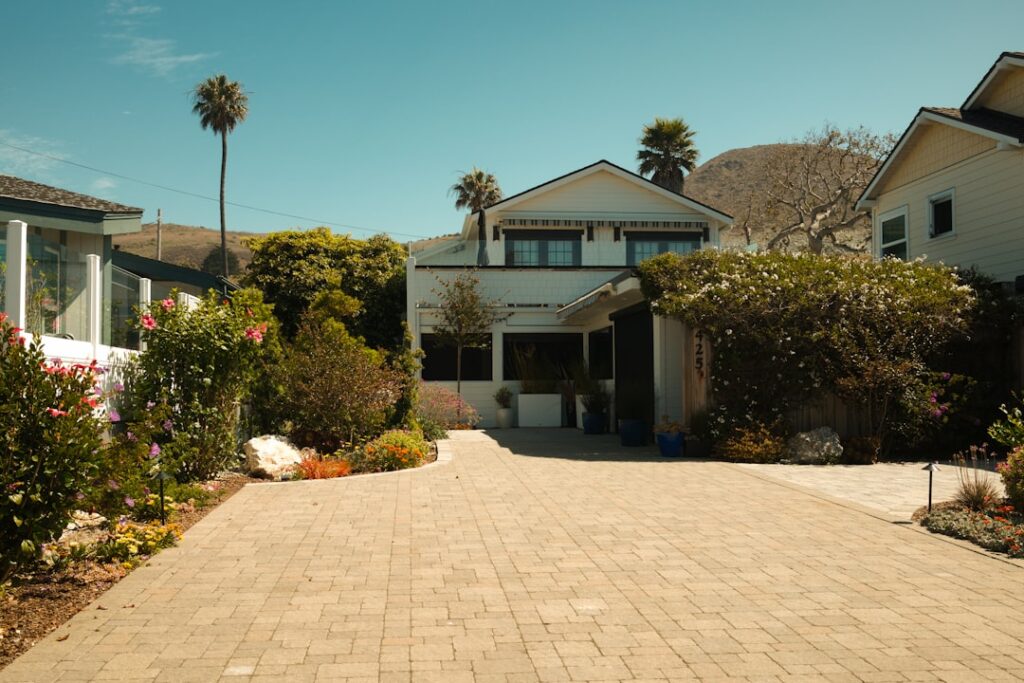
A paver driveway can give you more choice of pattern, color and repair options than a poured surface. For a common installation, use a broad $10–$30 per-square-foot planning range, or $6,000–$18,000 for 600 square feet. Natural stone, premium brick, complex patterns and extensive groundwork may exceed that range.
Paver driveway cost at a glance
| Driveway size | Planning range | Calculation |
|---|---|---|
| 400 sq. ft. | $4,000–$12,000 | 400 × $10–$30 |
| 600 sq. ft. | $6,000–$18,000 | 600 × $10–$30 |
| 1,000 sq. ft. | $10,000–$30,000 | 1,000 × $10–$30 |
The surface units are only one part of the installation. A drive that carries vehicles also needs an appropriate base, bedding, edge restraint and joint treatment. Ask bidders to name those layers rather than pricing the pavers alone.
Concrete, brick or stone pavers?
- Concrete paversAvailable in many colors and shapes. Ask for the actual product and confirmation that it is suitable for vehicle traffic.
- Brick paversOffer a traditional look. Compare product specifications, finish and the edge detail rather than appearance alone.
- Natural stoneCan produce a distinctive finish, but the stone type, size, thickness and laying pattern can shift the cost well above a basic range.
- Permeable systemsDesigned to manage water through the pavement system. They require a compatible base and drainage design; do not substitute standard pavers or a standard base.
A patio paver is not automatically suitable for a driveway. Ask the supplier or installer for the proposed product’s vehicle-use specification and a sample of the exact color and finish. Compare the installed system, not a retail unit price.
What changes the price of a paver driveway?
- Excavation and baseSoil condition, removal of an old drive, aggregate layers and compaction affect labor and material use.
- Bedding and edgesA stable bedding layer, restrained edges and correctly finished joints all matter to long-term performance.
- Shape and patternCurves, contrasting borders, intricate cuts and a turnaround can add time and waste.
- Water and accessDrainage design, slope and equipment access change both the scope and the bid.
Estimate the area before requesting bids
A rectangle 40 feet long by 15 feet wide covers 600 square feet. Multiplying by the $10–$30 planning band produces $6,000–$18,000. Measure a wider parking pad or apron as a separate shape, then add the areas together. Do not assume a contractor will charge for exactly that area: cuts, edge courses and the proposed layout affect how many units must be ordered.
Our main cost guide uses the same 600-square-foot example to compare pavers with gravel, asphalt and plain concrete. The comparison is most useful when the quotes include similar groundwork.
Repair and maintenance
One advantage of individual units is that a damaged area can sometimes be lifted and reset without rebuilding the entire surface. That still depends on the condition of the base; replacing a few units will not solve ongoing settlement underneath. Ask what joint material is proposed, how weeds or movement are managed, and whether the product has any special cleaning or sealing requirements.
Keep surface water moving as designed. If considering a permeable driveway, ask who will maintain the joints and drainage system, and what equipment or cleaning schedule it needs. Ordinary pavers over an ordinary base should not be advertised as a permeable installation.
What belongs in a paver quote?
- GroundworkMeasured footprint, removal, excavation, disposal, base material and compaction.
- Surface systemPaver manufacturer and model, vehicle rating, bedding, pattern, borders and edge restraints.
- Water and accessDrainage, finished slope, transitions at the street and garage, and site access.
- Project termsItemized total, work schedule, payment stages, maintenance guidance and warranty.
Ask for separate prices for premium pavers and borders. This makes it easier to compare a practical baseline with the design upgrades that matter to you.
Paver driveway FAQs
Can I use patio pavers on a driveway?
Do not assume they are suitable for vehicles. Ask for the exact product specification and a driveway design that covers the base, bedding, edges and anticipated loads.
Are permeable pavers the same as ordinary pavers?
No. A permeable installation needs a compatible surface, joints, base and water-management design. Ask where water will go and what maintenance the system needs.
Can settled pavers be lifted and reused?
Some individual units can be lifted and reset if they remain sound. The installer still needs to identify why the area sank and repair the underlying bedding or base; resetting the visible units alone may leave the problem in place.
Does the $10–$30 range cover natural stone?
It is a broad range for common installed paver systems, not a guarantee for premium stone. Ask for the material and installation to be itemized, and compare a standard option with the stone upgrade.
How these costs were calculated
We use $10–$30 per square foot as a broad planning range for common installed paver driveways, consistent with Angi’s paver cost guide and the 600-square-foot example in NerdWallet’s driveway comparison. We multiply that range by each stated area. Material and site conditions vary, and premium systems may cost more. Reviewed September 2026.